Gaining admission to Stanford University remains one of the most competitive achievements for students worldwide. As we look toward the 2026 intake, it’s more important than ever to understand the numbers, what the admissions committee is looking for, and how to set yourself apart. This article offers a complete, up-to-date guide on Stanford University admission rate, admission requirements for both undergraduate and graduate courses, and practical advice for prospective applicants.
📊 Stanford University Admission Rate — What’s the Reality for 2026?
Stanford has become increasingly selective over the past decade. For the class of 2026, many sources report that around 56,378 applicants competed for roughly 2,075 places, putting the acceptance rate at approximately 3.68%. 1 This underscores how rare a spot at Stanford really is: fewer than 4 out of every 100 applicants get in.
To give context:
- For the prior class (2025), some sources estimated acceptance at ~3.9%.
- Others put more recent classes around 3.6–3.7%.
- Historically (over the last decade), acceptance rates have generally ranged between ~4 % and ~6 %, but the downward trend shows increasing competition.
In short: as of 2026, expect the acceptance rate to hover around the mid-3 percent range. This means even excellent candidates need more than just grades — holistic excellence is key.
🧑🎓 Undergraduate Admission Requirements (2026)
Undergraduate admission at Stanford is holistic: academics matter, but so do extracurriculars, character, and personal stories. That said, certain academic benchmarks and application materials remain pretty standard across all applicants. Here’s what you need to know for 2026.
Key Academic and Application Requirements
- High School Transcript & GPA: Competitive applicants typically have GPAs in the 3.9–4.0 unweighted range.
- Rigorous Coursework: Taking challenging courses — e.g. honors, Advanced Placement (AP), IB, or other advanced curricula — strengthens your application.
- SAT or ACT Scores: For Fall 2026, standardized testing will once again be required. Applicants must submit either SAT or ACT scores. The middle 50% range for admitted students tends to be high: many sources cite SAT scores around 1500–1570 or ACT around 34–35.
- English Language Proficiency (for International Students): Non-native English speakers typically must provide TOEFL, IELTS, or equivalent proof of proficiency. Many graduate programs at Stanford also enforce English proficiency requirements.
- Holistic Components: Stanford reviews extracurricular activities, leadership, intellectual curiosity, personal essays, recommendations, and more. Outstanding non-academic achievements can make a difference.
Application Options & Deadlines
Stanford offers two main application pathways:
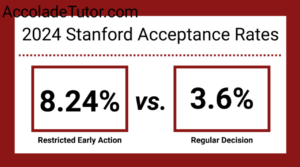
- Restrictive Early Action (REA): Deadline typically in early November. Non-binding, but you cannot apply early to other private colleges.
- Regular Decision: Deadline generally by early January. Decisions released in spring.
Since testing (SAT/ACT) is required again for Fall 2026, plan for test dates early enough to ensure scores are submitted before deadlines. As always, a strong application portfolio — blending academics, essays, activities — matters most.
🎓 Graduate & Other Program Requirements (Masters, PhD, Professional Schools)
Beyond undergraduates, Stanford offers a wide range of graduate, doctoral, and professional-level programs — from engineering to humanities, business, law, medicine, and more. Admission requirements vary depending on the department, but these general patterns hold.

What Stanford Looks for in Graduate Applicants
- Previous Degree: Typically a relevant bachelor’s degree (or equivalent) from an accredited university. For international applicants, equivalency evaluation may be required.
- Transcripts and Academic Record: Strong undergraduate grades, coursework relevant to the intended field of study.
- Standardized Tests & Language Proficiency: Some programs may require GRE/GMAT, while for non-native English speakers TOEFL/IELTS may be mandatory.
- Letters of Recommendation: Typically 2–3 academic (or professional) references. Strong recommendations from professors or professionals familiar with your academic/professional work help significantly.
- Statement of Purpose / Personal Statement / Research Proposal: A clear, compelling narrative explaining why you wish to study at Stanford, what you bring to the table, and your future goals. This is often a major deciding factor — especially where admission rates are extremely low.
- Resume / CV / Portfolio (if applicable): For certain fields (e.g. arts, design, engineering research), relevant projects, publications, work experience, or creative portfolios may be required or strongly recommended.
- Fit & Potential: Stanford values intellectual vitality, research potential, innovation, leadership qualities, and alignment with departmental values.
Because of the variety in graduate programs, there is no universal acceptance rate for all courses — some departments are slightly less competitive, others far more so (especially in business, medicine, or certain research-heavy tracks). Overall, graduate acceptance remains tightly selective and often more competitive than many other universities.
🔑 What Makes Admission at Stanford So Competitive?
Understanding the low acceptance rate — and what the admissions team values — helps you approach your application strategically. Below are the main factors influencing competitiveness:
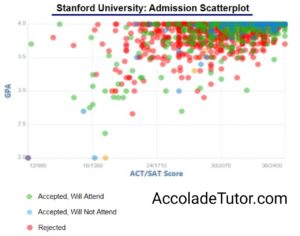
- Huge applicant pool: Tens of thousands apply each year from across the world, with many detached from GPA or test score limitations — making raw numbers enormous.
- Holistic screening: Even with stellar academics, Stanford expects well-rounded candidates: leadership, community involvement, creative/academic passion, and more.
- High bar for academics and testing: Middle-50 % SAT/ACT and high GPAs set the academic “entry threshold.” Many admitted students exceed these.
- Limited spots with high demand: With only ~2,000 first-year spots but tens of thousands of applicants, math is heavily against many qualified students.
- Graduate & specialized programs are more selective: Programs like engineering, business, medicine, and other professional fields draw extremely competitive applicant pools.
🎯 Tips for Applicants (Especially International Students) for 2026 Intake
If you’re considering applying to Stanford in 2026 — whether as an undergraduate or graduate student — here are actionable suggestions to help your application stand out:
- Plan early & aim high academically. Take the most rigorous curriculum your high school or undergraduate institution offers. If in high school: AP, IB, honors, or advanced classes. If in undergrad and applying to graduate school: aim for the top of your class.
- Prepare thoroughly for SAT/ACT (undergrad) or GRE/GMAT (grad, if required). Since testing is required again for 2026, strong scores matter. Schedule your tests early to leave room for retakes if needed.
- Focus on intellectual passion & unique strengths. Write essays that showcase your curiosity, growth, creativity, ambition, and values. Highlight unique experiences — research, community service, leadership, creative projects — that align with Stanford’s culture.
- Craft compelling recommendation letters (grad applicants especially). Build relationships with professors or professionals who really know your work — strong, personal recommendations go a long way.
- For international students — demonstrate English proficiency & cultural adaptability. Submit TOEFL/IELTS (or equivalent) early, and be ready to explain why Stanford is the right fit for you.
- Apply strategically: consider REA (if eligible) or Regular Decision, but ensure your application is as strong as possible. Rushing to meet deadlines rarely pays off at a school this selective.
- Backup plan: apply to multiple schools. Because acceptance is very uncertain — even for excellent applicants — having alternatives is wise.
🌐 Why This Matters Worldwide (Especially for International Students)
Stanford doesn’t just admit U.S. students — its freshman classes draw from 50 US states and dozens of countries around the world. What this means for you:
- Global competition: You’ll be compared not just with national peers but outstanding students globally — raising the bar significantly.
- Diverse applicant pool: The committee looks for a mix of backgrounds, perspectives, talents — whether academic, creative, social, or leadership-driven. Standing out means showing what’s unique about you.
- Need-aware admissions for internationals requiring financial aid: For some graduate and undergraduate admissions, financial aid requests may influence decisions — so make sure your application shines academically and personally if you need aid.
🔗 Additional Resources & Where to Learn More
To explore further, consider visiting these pages:
- Stanford University Admissions Official Page — for latest application guidelines, deadlines, and policies.
- Undergraduate Applicant, Admit and Matriculant Trends Report — a detailed historical dataset on acceptance rates, yield, and more.
- Stanford University Profile on U.S. News — for ranking, program offerings, and general overview.
- Stanford university axess 2025
✅ Final Thoughts
Getting into Stanford in 2026 is incredibly challenging. With acceptance rates around 3.6–3.7% for undergraduates, and rigorous expectations for graduate programs, you need more than strong grades: you need passion, distinctiveness, academic rigor, and a compelling personal narrative.
For international students and graduates, early planning, strong preparation, and a standout application are essential. But remember: when applying to a world-class institution like Stanford — even the very best candidates may not gain admission. So, aim high, apply broadly, and use this guide to give yourself the best shot possible.