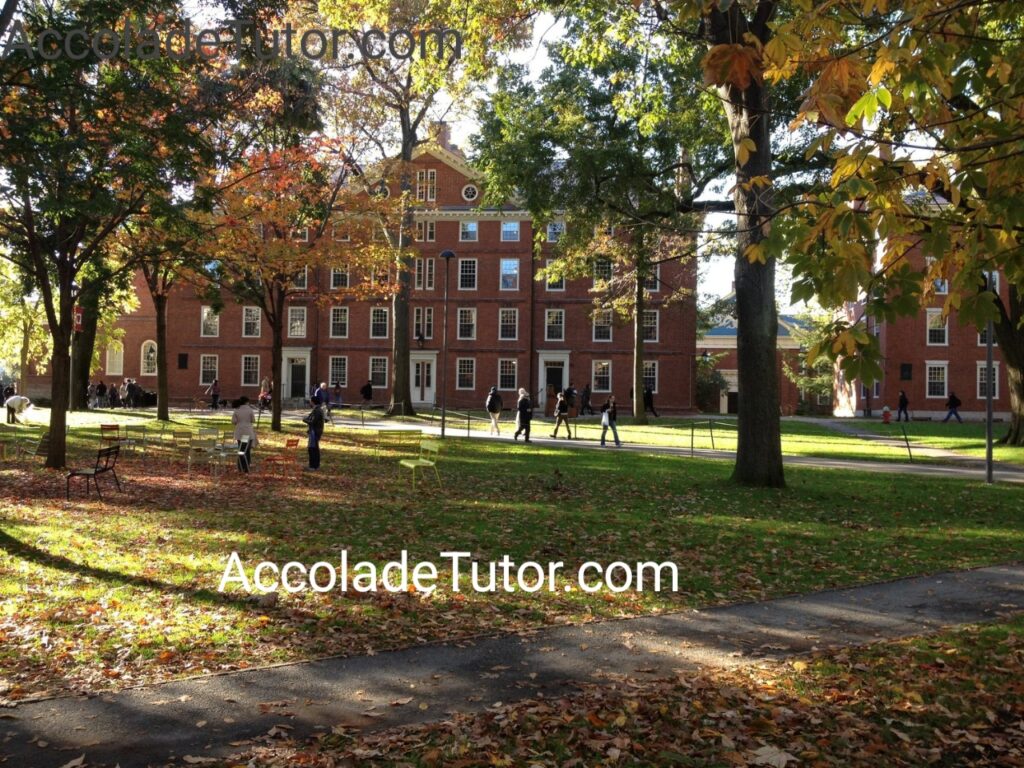
Harvard Museum of Natural History, this breathtaking exhibit features over 4,000 exquisitely crafted glass models of plants. At first glance, they look freshly picked. Look closer—and you’ll realize they are made entirely of glass.
For more than a century, visitors from around the world have stood in awe before these lifelike botanical wonders. They aren’t just art pieces; they were created as scientific teaching tools. Today, they stand at the intersection of science, craftsmanship, and history—an experience that leaves a lasting impression on anyone who sees them.
What Are the Harvard University Glass Flowers?
The harvard university glass flowers are a collection of highly detailed glass plant models commissioned by Harvard University in the late 19th century. They were produced by a father-and-son team of German glass artisans, Leopold and Rudolf Blaschka, between 1887 and 1936.
These models were originally designed for Harvard’s botany department to help students study plant structures year-round. At the time, preserved plant specimens would fade or lose detail. The Blaschkas solved this problem by creating permanent, anatomically precise replicas.
The Story Behind the Masterpieces
The project began when Professor George Lincoln Goodale of Harvard recognized the limitations of dried botanical specimens. With financial support from benefactor Mary Lee Ware and her mother, Elizabeth C. Ware, Harvard commissioned the Blaschkas to produce botanical teaching models.
Over nearly five decades, the Blaschkas created more than 3,000 plant models representing 780 species. Every stem, petal, root system, and even diseased plant tissues were sculpted by hand. No molds. No mass production. Each piece was individually crafted using lampworking techniques.
Inside the Collection
Walking through the gallery, visitors quickly forget they’re looking at glass. The realism is extraordinary. You’ll find:
- Flowering plants in full bloom
- Cross-sections showing internal anatomy
- Enlarged models of microscopic plant parts
- Fruit and seed development stages
- Models depicting plant diseases caused by fungi and bacteria
The delicate coloration was achieved using special glass mixtures and painted details. The Blaschkas also used wire supports and adhesives to replicate intricate biological forms.

Why the Harvard University Glass Flowers Matter
The harvard university glass flowers represent more than artistic brilliance. They mark a turning point in scientific education. Before photography became advanced enough to capture microscopic plant detail, these models were the most accurate teaching resources available.
Even today, botanists admire the scientific precision. Many experts have confirmed that the models remain remarkably accurate by modern standards.
Their significance spans three major fields:
- Botany – Providing permanent, detailed specimens.
- Art – Demonstrating unmatched glass craftsmanship.
- History of Science – Representing a unique collaboration between academia and artisans.
Where to See the Harvard University Glass Flowers
The entire collection is permanently displayed at the
Glass Flowers Gallery within Harvard’s museum in Cambridge, Massachusetts.
If you’re planning to visit Harvard, this exhibit is often considered a highlight—even more memorable than many larger museums.
For students interested in studying at Harvard or exploring Ivy League admissions guidance, you may find helpful academic preparation resources at:
How the Glass Flowers Were Made
The Blaschkas used lampworking, a technique where glass rods are heated over a flame and shaped manually. Unlike industrial glass production, this was entirely handcrafted.
They combined clear and colored glass, wire armatures, and special adhesives to build up each plant from root to bloom. Some models required months to complete.
Interestingly, the Blaschkas guarded their techniques closely. They never fully documented their methods, making the process something of a mystery even today.
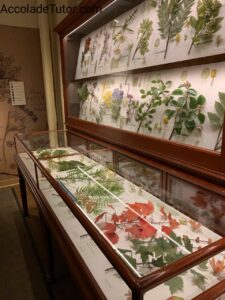
Rare and Remarkable Highlights
Among the thousands of models, a few stand out:
- Detailed orchids with translucent petals
- Carnivorous plants capturing prey
- Life cycles of cotton and wheat
- Enlarged pollen grains and reproductive structures
The disease models are particularly fascinating—they show how fungi infect leaves and stems, something rarely visualized so clearly in the 19th century.
Global Recognition and Cultural Impact
The harvard university glass flowers have been featured in documentaries, academic journals, and art history publications. Scholars often describe the collection as “a miracle of realism.”
Unlike temporary exhibitions, these glass flowers have remained continuously displayed for generations. They have survived wars, technological revolutions, and evolving museum trends.
Tips for Visiting the Exhibit
- Allow at least 60–90 minutes to fully appreciate the details.
- Photography is typically allowed (without flash).
- Visit during weekdays for a quieter experience.
- Pair your visit with other Harvard Museum exhibits.
If you’re considering studying in the United States and would like personalized guidance on Ivy League pathways, you can reach out directly via WhatsApp at
+1 (734) 366-3749 for tailored academic consultations.

Frequently Asked Questions About Harvard University Glass Flowers
Are the Harvard University Glass Flowers really made of glass?
Yes. Every petal, stem, and root is handcrafted from glass, sometimes reinforced internally with fine wire.
Who created the collection?
The models were made by Leopold and Rudolf Blaschka, German glass artisans commissioned by Harvard.
Why were they created?
They were designed as permanent botanical teaching tools before modern preservation and photography methods were available.
Can you see them online?
Yes, portions of the collection are viewable through Harvard Museum’s digital archives.
Final Thoughts
The harvard university glass flowers stand as a testament to patience, precision, and the power of collaboration between science and art. They are not simply museum pieces—they are enduring symbols of curiosity and human craftsmanship.
Whether you are a botany enthusiast, an art lover, or a prospective Harvard student, experiencing this collection offers something unforgettable. Few exhibits in the world combine history, beauty, and scientific accuracy with such grace.
For academic mentorship, Ivy League preparation, or personalized admissions support, contact the official WhatsApp line at
+1 (734) 366-3749.