If you’ve ever wondered about the role of culturally rooted education in shaping strong communities and enlightened leaders, Muhammad University of Islam Chicago stands as a compelling example of how history, faith and academic ambition can blend to create a distinctive learning environment.
Located in the South Shore neighborhood of Chicago, Illinois, Muhammad University of Islam Chicago is not just “another private school.” It is part of a broader educational movement established to uplift Black families through knowledge, discipline, and spiritual development. In a city known for its deep cultural history and diverse educational landscape, this institution has been instrumental in shaping generations of learners grounded in self-awareness, academic excellence, and community pride.
Historical Roots and Foundational Vision
The origins of Muhammad University of Islam Chicago trace back to an initiative begun in the 1930s by the Honorable Elijah Muhammad, the leader of the Nation of Islam. Around this time, public education was widely criticized for systemic miseducation and racial disparities that left many Black families feeling underserved and marginalized. In response, Elijah Muhammad envisioned a network of schools that would provide not only academic instruction but also uplift students intellectually, morally, and spiritually.
Though the network began in Detroit, Michigan, institutions like the one in Chicago emerged as central hubs for this educational philosophy. By the time Minister Louis Farrakhan re-established the Nation of Islam’s institutions in the late 20th century, Muhammad University of Islam had grown into a respected independent school system. The Chicago location, adjacent to the historic Mosque Maryam (the headquarters of the Nation of Islam), became particularly prominent.
Today, the school continues to operate with its mission deeply rooted in the belief that knowledge of self, God, and community are essential foundations for individual achievement and collective transformation.

A Curriculum Anchored in Identity, Faith, and Scholarship
At its core, Muhammad University of Islam Chicago provides education from preschool through 12th grade, emphasizing a holistic and interdisciplinary approach to learning. While the school meets core academic expectations in subjects like literacy, mathematics, science, and history, it also places a strong emphasis on spiritual formation and moral development.
Unlike many conventional school models that separate values from academic learning, this institution interweaves teachings of faith with everyday instruction. Students begin their day with communal prayer and devotional reflection, followed by core academic classes that are taught in ways that encourage critical thinking, self-discipline, and confidence. The belief is that academic excellence and moral character are not mutually exclusive — rather, they reinforce one another.
In practice, this means students engage in a variety of subjects while also developing a strong sense of identity, purpose, and responsibility to their communities. While there has been debate in broader educational circles about the balance between religious instruction and standardized academic preparation, the success stories emerging from the university speak to the efficacy of its approach. For readers curious about traditional academic benchmarks — how schools report data like admissions and educational outcomes — the way this differs from conventional institutions is illustrated in external resources like this look at the Princeton University Common Data Set, which shows how structured reporting and academic transparency support broader understanding of school performance.
Community Impact and Alumni Achievements
A key measure of any educational institution’s impact is the accomplishments of its graduates. Alumni of Muhammad University of Islam Chicago have gone on to succeed in various fields — from neuroscience and architecture to public health and international relations. Stories from alumni reveal how the values instilled during childhood at MUI influenced not only their academic pursuits but also their commitment to community development and service.
One graduate, for example, pursued neuroscience with a mission to contribute to mental health solutions for underserved communities, while another became an architect determined to design spaces that reflect the cultural and practical needs of Black neighborhoods. These trajectories demonstrate the school’s emphasis on both intellectual rigor and real-world application.
The success of MUI students reflects a wider narrative about the importance of culturally responsive education. Unlike traditional schools that often adopt a one-size-fits-all curriculum, institutions like Muhammad University of Islam Chicago tailor learning experiences toward identity affirmation and empowerment.
For educators, parents, and students evaluating different school environments, understanding how an institution’s curriculum and educational philosophy influence outcomes is key. Resources like this overview of general university readiness frameworks provide useful context on how different educational institutions prepare learners for future challenges: Stanford University Average GPA & Admission Context.

The Role of Faith and Cultural Identity
One distinguishing factor about Muhammad University of Islam Chicago is how central faith and cultural identity are to the learning journey. Islamic studies and devotion are not add-ons; they are integrated into daily rhythms and learning objectives. This means that students aren’t merely earning grades — they are also cultivating spiritual awareness and ethical frameworks that guide their decision-making and worldview.
Critics of faith-based education sometimes question whether religious content might limit academic breadth. But supporters point out that a culturally grounded curriculum can actually deepen engagement and provide context for critical thought. By grounding students in traditions that affirm their dignity and history, MUI seeks to counteract historical narratives that have marginalized Black learning and achievement.
Importantly, this integration of faith and scholarship is not unique to MUI. Many institutions around the world, whether secular or spiritual, recognize the value of education that honors both intellectual and ethical growth. Still, the way that Muhammad University of Islam Chicago combines these elements — particularly within the African American experience — remains uniquely impactful.
A Look at the School Environment
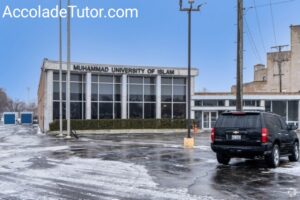
The physical campus of Muhammad University of Islam Chicago sits adjacent to Mosque Maryam, the national headquarters of the Nation of Islam. This location is more than geographic; it symbolizes the inseparable link between faith, community leadership, and learning.
Parents who choose this school often emphasize the close-knit environment, where teachers and administrators are deeply invested in student success and where academic pursuits are seen as part of a lifelong journey of service and personal development. Many families describe the school as fostering a sense of belonging and mutual care that extends beyond the classroom.
Educational Philosophy in Practice
What truly sets Muhammad University of Islam Chicago apart is how it operationalizes its educational philosophy. Rather than treating faith and academics as separate domains, the school embeds lessons about identity, cultural pride, and spiritual awareness into all areas of study. This holistic approach nurtures learners who are not only ready for academic challenges but also committed to serving their communities.
At a time when educational equity continues to be a national conversation, MUI’s model raises important questions about how schools can be responsive to the needs of historically underserved populations. Whether through nurturing critical thinkers, inspiring community builders, or supporting ambitious graduates, the institution’s legacy is one of transformative learning grounded in cultural affirmation.
Final Thoughts: Why It Matters
Muhammad University of Islam Chicago exemplifies how education can be a vehicle for empowerment when it prioritizes holistic development — intellectual, spiritual, and social. Its historic roots, alumni achievements, and community-centered approach offer meaningful insights for anyone interested in education that extends beyond conventional metrics.
While it operates within a specific cultural and faith tradition, the broader principles — fostering identity, resilience, and community engagement — have relevance far beyond any one campus. For learners and families exploring educational options that value both academic excellence and personal growth, understanding institutions like MUI enriches the conversation about what truly constitutes meaningful education in the 21st century.