If you’re searching for reliable information about the Stanford University Directory—how it works, how to look up people, staff, departments, research groups, or campus offices—then you’ve landed on the right page. In this comprehensive guide, we break down everything you should know about Stanford’s directory system, why it exists, how to use it effectively, and other important access tools that can help students, parents, researchers, and visitors find exactly who or what they’re looking for on campus.
What Is the Stanford University Directory?
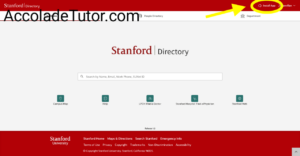
The Stanford University Directory is an online database designed to help you find people, departments, offices, and research divisions affiliated with Stanford. Think of it as Stanford’s official “phonebook,” but far more advanced. The directory includes faculty profiles, administrative contacts, academic departments, student services, research centers, and key campus resources that enable smooth communication across the institution.
For a highly collaborative university like Stanford, where innovation spans hundreds of departments and thousands of researchers, having a central directory makes navigation fast and efficient.

Who Can Use the Stanford University Directory?
The directory is accessible to:
- Prospective and current students searching for faculty or academic advisors.
- Researchers looking for collaborators or faculty profiles.
- Parents and guardians trying to reach administrative offices.
- Visitors seeking departmental contact details.
- Alumni reconnecting with departments or staff members.
While most directory entries are public, some detailed staff information may require Stanford login due to privacy regulations.
Why the Stanford University Directory Matters
Stanford University hosts over 2,400 faculty members, 17,000+ students, and dozens of academic divisions. Tracking contacts manually would be nearly impossible. The directory solves this by consolidating verified information into a single, easy-to-search platform.
Here are a few reasons the directory is essential:
- Accuracy: All listings are official Stanford records.
- Simplicity: A clean, searchable interface.
- Time-saving: Quickly locate individuals or offices.
- Transparency: Publicly accessible professional profiles.
- Networking: Helps students, researchers, and collaborators connect seamlessly.
How to Use the Stanford University Directory (Step-by-Step)
Using the directory is simple, but getting the best results requires knowing what to search for. Follow these steps:
1. Open the Directory Page
Visit Stanford’s official directory search page. You can also find it through the main Stanford website by clicking on the “A–Z Index” or “People” search bar.
2. Enter the Name or Keyword
You can search by:
- Full name
- Last name or surname
- Email username (e.g., jdoe)
- Department or job title
- Research area or specialization
3. Browse the Filtered Results
Results typically include the person’s:
- Full name
- Position or title
- Department
- Email address
- Office location
- Phone number (if available)
You can click into a person’s profile for more detailed academic or administrative information.
4. Use Department Filters
If you don’t know someone’s exact name, narrowing your search by department can help. For example:
- Computer Science
- School of Engineering
- Graduate School of Education
- Office of Student Affairs
5. Access Faculty Profiles
Many faculty profile pages include:
- Research interests
- Publications
- Office hours
- Course listings
- Personal academic websites
Sections You Can Find in the Stanford Directory
Stanford’s directory is organized into categories that make navigation easy even if you are unfamiliar with the university structure:
1. Faculty & Academic Staff
These are professors, lecturers, instructors, and research scholars. Their profiles often include research detail, contact information, and departmental links.
2. Administrative Offices
Includes contacts in areas such as admissions, financial aid, housing, and student services.
3. Departments & Schools
Stanford has seven major schools including Engineering, Medicine, Humanities & Sciences, and Law. The directory connects directly to department sites.
4. Research Centers & Labs
Perfect for researchers seeking collaboration opportunities or accessing lab administrators.
Tips for Getting Better Results in the Stanford Directory
Here are a few pro tips to make your search more productive:
- Use partial names: Entering “Ander” may pull up “Anderson,” “Anders,” or “Anderly.”
- Try department keywords: If unsure of the person’s name, search by division.
- Use job titles: Searching “advisor” or “assistant dean” may quickly locate key staff.
- Avoid initials unless necessary: Full names yield more accurate results.
Common Queries About the Stanford University Directory
Is the Stanford Directory Public?
Yes, much of it is public. However, some staff and student details are restricted.
Can I Email Someone Directly from the Directory?
Yes. Most profiles include clickable email links.
Are Students Listed?
Student listings are limited for privacy reasons. You may only find graduate students or those with public-facing roles.
Does Stanford Allow Phone Contact?
Some departments offer phone numbers, but email is often preferred for faster response time.
Additional Stanford Resources You May Need
The directory connects you to other essential platforms. Below are important related resources:
- Stanford Canvas – for students and faculty managing courses.
- Official Stanford Website – the starting point for campus-wide resources.
For more Stanford-related guides, you may also explore similar posts on our site, such as:
How Stanford Maintains Its Directory
Stanford updates its directory frequently, usually through automated systems synced with internal human resources and academic databases. Faculty profiles update when titles change, departments refresh contact information, and researchers update their academic activities.

This ensures accuracy across teaching units, student services, and administrative departments. Outdated entries are removed promptly to maintain reliability.
Benefits of Using the Stanford University Directory
Here’s why it’s a must-use tool:
- Fast Communication: Connect instantly with departments and professors.
- Improved Student Support: Students can quickly locate advisors or offices.
- Research Collaboration: Helps academics find experts in specific fields.
- Visitor Assistance: Visitors can easily reach campus offices for guidance.
Concluding
The Stanford University Directory is more than a simple search feature—it is a gateway to accessing the entire Stanford network. Whether you’re a prospective student researching departments, a current student locating an advisor, or a researcher looking to establish collaboration, the directory puts the entire university’s resources within your reach.
Bookmark this blog page, share it with colleagues, and use the directory to navigate one of the world’s most influential universities with confidence, Don’t forget to comment below and visitor Contact Page for more enquiries